
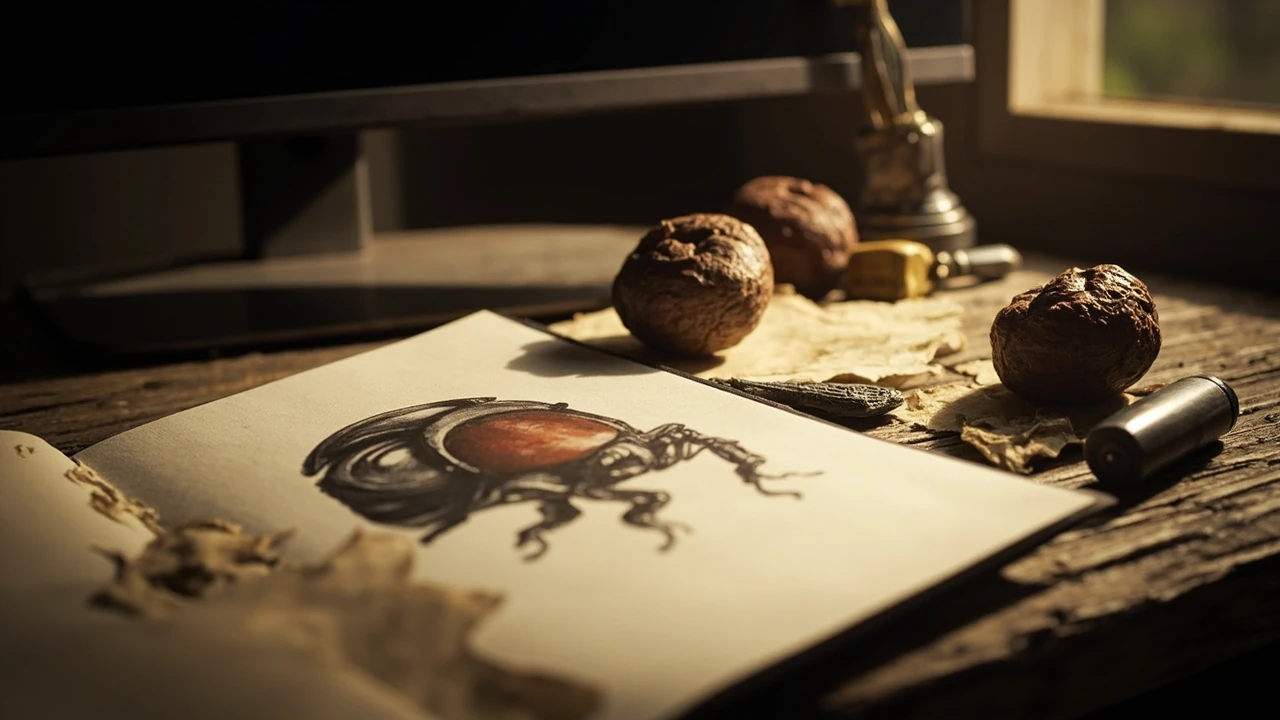

Crustnut silksong: what the term actually refers to
The phrase crustnut silksong does not appear in any official Team Cherry announcement, patch note, or developer interview that has been published. It is a community-coined search string that fuses two ideas that show up constantly around Hollow Knight: Silksong: the original game’s dense creature design, where a small, armored, nut-like bug would feel at home, and the sequel’s continued focus on Hornet’s movement, silk abilities, and new bestiary. When a fan types crustnut silksong into a search engine, they are usually trying to find one of three things: a rumored enemy or item, a fan concept that mashes insect and chestnut imagery together, or a meme that has escaped its original thread and is now being treated like a real game term.
Because the phrase has no canonical meaning, the most useful answer is to unpack how such a term forms, what the underlying Hollow Knight and Silksong design language actually is, and where the line is between playful fan invention and a feature that could plausibly be added. This article treats crustnut silksong as a search-intent artifact. It explains the design vocabulary Team Cherry has already established, walks through how new creatures and items tend to enter the series, and gives readers a way to tell fan art from a leak without falling for either.
Why people search for crustnut silksong
Search phrases that combine two unrelated nouns are common in the Hollow Knight community because the games themselves are built from dense, evocative wordplay. The original title uses a small handful of recurring suffixes and imagery: shell, spore, twig, bloom, weave, and crest. A new term such as crustnut can sound as if it belongs in that vocabulary, even though Team Cherry has not used it. Once a fan art piece, a joke, or a half-remembered rumor attaches that word to Silksong, search engines begin to surface it as if it were a real feature, which makes more people type it and reinforces the loop.
For a reader, the practical effect is that crustnut silksong now behaves like a niche query with a thin supply of reliable answers. The goal of this page is to give that query a thorough, careful response: explain the likely origin, describe the design space the term seems to borrow from, and outline the criteria a reader can use to evaluate any future claim about a crustnut, a related item, or a creature of that name appearing in Silksong.
There is also a generational reason the term caught on. Silksong has been in public pre-production and development for a long stretch, and during that window the franchise’s fanbase aged into a community that runs on shared search terms. A phrase like crustnut silksong is short enough to fit a thread title, weird enough to stand out in autocomplete, and harmless enough to be shared without a disclaimer. That combination is exactly the kind of small linguistic event that takes on a life of its own inside a niche fandom.
The design vocabulary Team Cherry actually uses
To understand whether crustnut could ever be a real Silksong term, it helps to look at how Team Cherry names things. Across the original game, the lore entries, and the public previews of Silksong, names follow a few consistent patterns. They are usually short, often one or two syllables, and they frequently combine a material or texture word with a small creature or object. Real examples include Charm, Cocoon, Geo, Salubra, Mantis, Spore, Shroom, Grub, Crawler, and Twister. A made-up term such as crustnut mimics this structure, pairing a surface descriptor with a small object, which is why it reads as plausible even to careful players.
Team Cherry also tends to lean into quiet, in-world explanation. A new creature is rarely introduced with a long flavor essay. Instead, the name is supported by an implied habitat, a visible behavior, and a short entry in an archive or codex once the player discovers it. A term such as crustnut, if it were real, would sit comfortably in that tradition: a hard-shelled, seed-like creature, possibly tied to a Pharloom or Citadel location, with a name that describes both its appearance and its place in the ecosystem.
There is also a phonetic side to the franchise’s vocabulary. Many Hollow Knight words use a hard consonant at the start, a soft vowel in the middle, and a clipped ending. Crustnut breaks that pattern slightly by leaning on a double “n” sound, which is closer to English botany vocabulary than to the fictional Pharloom dialect. That detail is small, but it is the kind of thing a careful player notices when a name feels like it is from a different game.
How new creatures, items, and abilities have entered Silksong
Silksong has been previewed across trailers, devlogs, and a public demo at events such as PAX Australia. The features that have been confirmed so far fall into a few clear buckets: Hornet’s expanded movement set, including the double backflip and a needle-throw ranged option; a new crafting layer built around craftmetal and shell shards; a bestiary of new enemies tied to Pharloom, including the Beefly, Fourth Chorus, and various Skull-type foes; and a quest structure driven by a Wanted-like board in the city of Bellhart. None of those confirmed features depend on a new mascot creature such as crustnut, which means that if the term were ever to become real, it would have to slot into one of these systems rather than create a new one.
| Confirmed Silksong system | Role in gameplay | Space where a new creature could fit |
|---|---|---|
| Hornet’s silk-based traversal | Movement, combat, and puzzle gating | Companion or environmental helper, not a traversal unlock |
| Craftmetal and shell shard crafting | Quest items and tool upgrades | Resource dropped by a small fauna creature |
| Bellhart quest board | Wanted tasks and NPC storylines | Hunt or fetch target drawn from the bestiary |
| Crest and tool loadouts | Combat and ability customization | Source of a minor buff or crafting material |
| Citadel and coral forest biomes | Exploration and lore delivery | Habitat for new insect or arachnid designs |
A hypothetical crustnut creature would most plausibly land in the resource or quest board column, because Team Cherry has shown a clear pattern of tying small, hard-shelled fauna to crafting drops and side tasks. That does not make the term real, but it does show that the structural space for a creature with a chestnut-like shell and a crust-like carapace is already open.
It is worth noting that the studio has been deliberate about what counts as a system. The original Hollow Knight kept its mechanic count low, and the sequel’s confirmed additions are mostly variants of patterns the first game already used. A new creature that ships as a pure flavor element with no mechanical hook would be a small departure from that instinct, which is another reason a name like crustnut is more likely to attach to a craft drop than to a standalone mascot.
What we can and cannot infer from fan art and memes
Fan art for Hollow Knight and Silksong is unusually rich, and a meaningful share of it invents creatures that look as if they were lifted from the games. The original game’s modding scene also produced a steady flow of new bestiary entries that look like canon. When a fan posts a piece of crustnut silksong art, it is often a deliberate exercise in that style: the artist is showing what a new bug could look like if Team Cherry ever designed one, rather than leaking a real asset. The signal value of such art is low. It tells you what the community wants to see, not what is in the build.
Memes travel even faster than art. A throwaway joke about Hornet riding a beetle, or a fake name for a new collectible, can move from a single screenshot to dozens of reposts in a week. By the time the original context is lost, the term behaves like a rumor. The only safe assumption is that a meme-born term is not a confirmed feature until an official source, a Team Cherry devlog, a press kit, or a first-party trailer, treats it as such. The For additional context, Hollow Knight article on Wikipedia summarizes what is publicly known about the franchise’s history, and that public history is a useful boundary when evaluating any fan claim about a new creature.
It also helps to remember that fan art sometimes informs official art in subtle ways. Studio designers browse the same forums as players, and silhouette ideas do migrate from sketch threads into production over long development cycles. That does not turn a fan drawing into a leak, but it does explain why a community-coined name and an eventual in-game creature can end up resembling each other without any direct line of contact between the two.
How a real Silksong announcement would actually look
For readers who want to know what a legitimate crustnut silksong announcement would resemble, the structure of past Team Cherry communications is the reference point. Trailers, including the 2019 announcement and the 2024 Xbox showcase clip, are short, focused, and built around environments that already exist in the game, with a small set of named creatures. Patch notes from the original Hollow Knight listed every change in numbered, neutral prose. The team’s social posts tend to be short, low-key, and tied to a specific event such as a show, an anniversary, or a charity stream.
| Source type | What it confirms | What it does not confirm |
|---|---|---|
| Official Team Cherry trailer | Creature silhouettes, environments, Hornet abilities | Internal names, drop tables, exact stats |
| Devlog on the Team Cherry site | Design intent, scheduling updates, engine notes | Player counts, sales figures, platform exclusivity |
| Press kit at a public event | Build version, hands-on features, demo length | Long-term roadmap, future DLC scope |
| Storefront description | Platform list, rating board submission, release window | Post-launch content, modding support |
| Studio interview | Art direction, narrative themes, composer details | Hidden mechanics, secret endings |
A crustnut, if it ever ships, would most likely be first seen in a trailer or demo hands-on report. The first sign would be a small, hard-shelled creature in a known biome, with a name that fits the existing vocabulary. Until that kind of first-party signal appears, the safest reading of crustnut silksong is that it is a community term, not a confirmed feature.
Players who want a more disciplined approach can also watch for indirect signals. A line added to a studio resume, a new creature archetype shown in a convention banner, or a small UI element in a storefront screenshot can each be a hint that a term has moved from fan vocabulary into production. None of those signals confirm a specific creature, but they are the same breadcrumbs that picked up earlier terms such as the Fourth Chorus and the Bellhart quest board before they were officially named.
How the term compares with real Hollow Knight creature names
It is worth comparing crustnut with actual Hollow Knight creatures to see where it sits on the realism scale. Real names tend to compress an idea into a single, evocative word. Mantis describes a type of warrior. Mimic describes a behavior. Grub describes both a stage of life and an object. Crustnut, by contrast, is a portmanteau, a blend of crust and chestnut, and that style is rarer in the franchise’s canon vocabulary.
| Example | Structure | Fit with Silksong tone |
|---|---|---|
| Mantis | Direct creature type | Strong, used as a faction name |
| Grub | Single descriptor with a double meaning | Strong, used as both a creature and a collectible |
| Spore Shroom | Two-word functional name | Strong, used for enemy and item variants |
| Crustnut | Portmanteau of texture and object | Unclear, blends two words that have not appeared together in canon |
| Cocoon | Single object that doubles as a state | Strong, used for environment and progression |
None of this rules out the name. It just suggests that if Team Cherry were to introduce a creature with a chestnut-shaped shell, the most likely first signal would be a clearer word, perhaps Chestnut Beetle, Nut Crawler, or a Pharloom-specific in-world name, rather than a portmanteau. Readers who want to keep tracking can watch for any term that resolves to a known creature silhouette in an official screenshot.
There is a related point about regional vocabulary. Pharloom, the kingdom where Silksong is set, has its own implied accent and dialect in the original game’s lore fragments. Names in that setting tend to borrow from older European craft words, the kind of terms a silk-weaving or bell-making culture might actually use. Crustnut reads more like a modern English blend, which is one reason it sits a little awkwardly next to names such as Lace, Cog, and Weave.
What crustnut silksong would mean as a quest or item
Even without confirmation, it is useful to think about the roles a term like crustnut could play if it were introduced. The Hollow Knight series tends to give small, named objects either a craft purpose, a lore purpose, or a collectible purpose. A crustnut could be a craft material, used alongside craftmetal to upgrade a tool. It could be a soft currency replacement for Geo in a specific region, which would be unusual for Team Cherry but not impossible in a sequel with new systems. Or it could be a delivery item for one of Bellhart’s quest board tasks, the kind of small object an NPC asks for to unlock a side room.
- Crafting material: dropped by a hard-shelled creature, used to upgrade a needle or a tool tier.
- Quest delivery item: requested by a Bellhart resident in exchange for a small reward and a line of dialogue.
- Region soft currency: only accepted by a specific vendor in a specific biome, mirroring the original’s Pale Ore and City Crest design.
- Lore token: read once, then stored in a codex, with no mechanical effect.
- Cosmetic or charm component: a rare drop used to unlock a purely visual variant of an item.
Any of these would fit the franchise’s current design language, and that is part of why a phrase such as crustnut silksong keeps appearing. The structural space for a new small object is wide, and the community is good at guessing what the next iteration could be.
It is also useful to think about which role a creature named crustnut would not play. Team Cherry has been deliberate about not repeating the original game’s progression structure, which means a new small object would not usually stand between the player and a major story gate. A crustnut would more likely live in the side content layer, the place where a long playthrough picks up small flavor rewards on the way to a late-game ending.
Why community terms can still be useful to designers
For developers and producers, the existence of a search term such as crustnut silksong is itself a signal. It tells the team that players want more named small creatures in the bestiary, more collectibles with a clear identity, and more of the soft wordplay texture that the original game used so well. Even if the term itself never becomes official, the pattern it represents is something a team can learn from: short, two-syllable names that compress a texture, an object, and a habitat into a single word feel native to this franchise.
That kind of signal matters in production. When a studio plans a bestiary, the hardest call is usually not the art direction but the taxonomy: how many small creatures, how many large bosses, how many mid-tier hunters, and what naming rule binds them. A community that has begun to coin its own portmanteaus is one that is looking for a richer bestiary, and that is a real input into scope planning, even if the specific coinage is not adopted.
For a small studio, this kind of indirect feedback is often more useful than formal surveys, because the data comes from the way players actually talk about the game rather than the way they answer a structured questionnaire. A search term that did not exist two years ago and is now a niche but persistent query is a real piece of community evidence, and a studio that pays attention to those terms is more likely to ship a bestiary that feels like it was written for the players who actually bought the game.
How to evaluate any future crustnut silksong claim
When a new claim about crustnut silksong appears, the right response is to check it against the same pattern Team Cherry has used for every other confirmed feature. The first test is the source. If the claim is not attached to a Team Cherry post, a first-party trailer, a press kit, or a storefront description, treat it as unverified. The second test is the artifact. A real leak usually includes something that cannot be faked, such as a build version number, a UI string in the game’s font, or a debug overlay.
- Check the source. Is it first-party, press, or community? If it is community, the default is unverified.
- Check the artifact. Is there a screenshot or video that holds up under close inspection, including reflections, frame rate, and HUD text?
- Check the vocabulary. Does the name fit the franchise’s existing naming patterns, and does the silhouette match a known creature type?
- Check the timing. Is the claim attached to a real event, such as a show, a stream, or a store update? Stray claims without a trigger are weaker.
- Check the spread. Is the term being amplified by accounts that also amplify other unverified claims? Repetition is not verification.
Running through that checklist takes a couple of minutes and prevents a reader from treating a meme as a roadmap. The same checklist applies to any new Silksong term, whether it is crustnut, a new crest name, or a rumored quest board entry.
There is also a habit that helps: keep a small running list of terms that did turn out to be real, the source they came from, and how long it took for the studio to confirm them. Over a few release cycles, that list becomes a personal credibility file, and the next time a new portmanteau shows up, you have a more grounded sense of which kinds of leaks tend to age well and which tend to dissolve.
How Silksong’s design philosophy shapes new creature work
Looking at the design philosophy that has already been confirmed for Silksong helps frame any new creature, including a hypothetical crustnut. Team Cherry has talked in past interviews about wanting each new region to feel like its own ecology, with creatures whose visual design telegraphs behavior. The Citadel zones lean on a more architectural, geometric vocabulary, with shell and coral motifs. The moss and grove regions use softer, more organic shapes. A creature whose name is built from crust and nut would visually belong in a hard, dry biome, which is a useful hint for any artist designing a fan piece.
For a reader who is not a developer, the more practical takeaway is that the franchise uses creature design to teach combat. The silhouette of a new enemy usually tells a player what the encounter will demand: a flying shape implies a vertical attack, a long shape implies reach, a round shape implies a rolling or bouncing pattern. A crustnut-shaped creature would most likely fit a hard, slow, armored pattern, which is useful information if a player encounters a creature of that shape in any future build.
There is also a narrative side. Each region in Silksong is built around a small set of repeated visual motifs, and the bestiary is the easiest way for a player to read those motifs. A new creature that does not pick up the motif of its biome tends to feel like an oversight, while a creature that leans into the motif hardens the sense of place. A crustnut, in that sense, would have a job to do beyond being a small enemy: it would have to confirm the texture of whatever dry, mineral region it lived in.
What a careful writer should and should not say about crustnut silksong
Because crustnut silksong is a community term and not a confirmed feature, the responsible editorial position is to describe what the phrase is and to be specific about the evidence that does and does not exist. Saying that the term is a confirmed creature would be wrong, because no first-party source uses it. Saying that the term is impossible would also be wrong, because Team Cherry has not published a full bestiary, and small creatures are easy to add to a Metroidvania without an announcement. The middle path is to describe the design space, give the reader the tools to evaluate any future claim, and avoid inventing specifics such as drop rates, hit points, or spawn locations.
- Do describe the design space the term seems to borrow from, including vocabulary patterns and confirmed Silksong systems.
- Do explain the difference between fan art, meme, leak, and first-party confirmation.
- Do give a checklist for evaluating any new crustnut silksong claim.
- Do not invent drop rates, item effects, region names, or release dates for a creature the term refers to.
- Do not present the term as canon, as a leak, or as a roadmap item.
That position is also the one that best serves a reader who is genuinely trying to understand the phrase. They walk away with a clear sense that crustnut silksong is a community term, an understanding of the design space it borrows from, and a checklist that they can use for the next rumored Silksong term, whether or not it is related to this one.
Writers covering a long-development sequel also have to be patient. Silksong has spent years in a state where partial information is normal, and that environment rewards writers who can hold a term like crustnut silksong at arm’s length until the evidence tightens. Speculation, in this corner of games coverage, ages badly if it is written as fact, and ages reasonably well if it is written as a working hypothesis that names its own limits.
How this article fits into a GameDev editorial cluster
For readers who came in through the GameDev angle, the same analysis doubles as a small case study in how to handle community-coined search terms. A term such as crustnut silksong is useful to a developer because it shows how players parse brand language, where the gap is between a real name and a portmanteau, and what kind of design space a new creature would need to slot into. Producers can use it as a small example of why a content taxonomy matters long before the assets ship. Artists can use it as a prompt for the kind of silhouette, palette, and motion vocabulary that fits a hard-shelled, chestnut-shaped bug in the franchise’s visual lineage.
The next article in this kind of cluster would naturally move from naming to the mechanics that surround a creature, including how drop tables, faction standing, and quest board tasks interact. That is a different spoke, with its own dominant intent, and it should not be merged with this page. The role of this page is to own the phrase, explain its origins, and give the reader a defensible answer when they next see crustnut silksong in a search result or a screenshot.
From an editorial planning perspective, this page also functions as a small reference for how a content team should react when a fan term breaks into search. The right move is rarely to publish a quick post that confirms the rumor, and it is also rarely to publish a long debunk that pretends the term does not exist. The middle path is the one taken here: a measured explanation of the design space, the vocabulary, the source patterns, and the limits of the evidence, written in a way that stays useful even if the term never becomes official.
Frequently asked questions
What is crustnut silksong?
Crustnut silksong is a community-coined search term that fuses a hard-shelled, nut-like creature image with the Silksong title. It is not an official Team Cherry name, item, or creature, but it borrows vocabulary patterns from the Hollow Knight series and is used by fans to refer to a hypothetical new small bug or collectible.
Is crustnut a real Silksong creature or item?
No first-party source, including trailers, devlogs, press kits, and storefront pages, has introduced a creature, item, or feature called crustnut. Until a Team Cherry post, an official trailer, or a press kit uses the term, it should be treated as community invention rather than confirmed content.
Why does the phrase crustnut silksong show up in search results?
The phrase appears because fan art, memes, and joke posts use it, and search engines treat repeated usage as a signal of interest. Once a small number of posts use the term, more curious fans type it in, which reinforces the loop and pushes the term into autocomplete suggestions.
Could a creature called crustnut be added in a future Silksong update?
It is possible in principle, because Team Cherry has not published a full bestiary and small creatures are common in Metroidvania design. The naming pattern would be unusual for the franchise, but a portmanteau such as crustnut is not impossible if a creature’s design naturally calls for that texture word.
How does crustnut compare with real Hollow Knight creature names?
Real names tend to be short, single-word descriptors such as Mantis, Grub, and Spore Shroom. Crustnut is a portmanteau of two words, which is rarer in canon, but not strictly forbidden. A real Team Cherry name for a similar creature would more likely be a single, evocative word rather than a blended term.
What would a real Silksong announcement of a new creature look like?
A real announcement would most often appear first in a Team Cherry trailer, a hands-on preview at a public event, or a devlog on the team’s site. The creature would be shown in a known biome, would be named in a way that fits the franchise’s vocabulary, and would usually be tied to a gameplay hook such as a craft drop, a quest, or a new ability.
How can I tell if a crustnut silksong claim is real?
Check the source, the artifact, the vocabulary, the timing, and the spread. First-party sources, sharp artifacts, fitting vocabulary, a real-world trigger, and independent amplification are the five signals to look for. If even one of those is missing, treat the claim as unverified until a stronger signal appears.
Does crustnut silksong tell us anything about Silksong’s bestiary size?
Indirectly, yes. The fact that fans are inventing portmanteau names suggests an appetite for more named small creatures, which is useful context for a studio planning scope. A franchise that has players coining creature names in advance is one that has a strong bestiary identity worth extending.
Is crustnut silksong useful for a developer or producer working on similar games?
Yes, as a case study in how community terms form around a brand’s vocabulary. A developer can read the phrase as evidence of where the design language is strong, where there is room for new small creatures, and how a portmanteau compares with a canonical naming style. That is a useful input into content planning and brand voice work.
What should I do if a new post claims crustnut is in the next Silksong build?
Wait for first-party confirmation. Do not share the claim as fact, do not amplify it without the source, and run it through the five-step checklist above. If the claim survives, Team Cherry will usually confirm or deny it in the same news cycle. If the claim does not survive, treating it as a meme is the safer editorial position.
Leave a Reply