
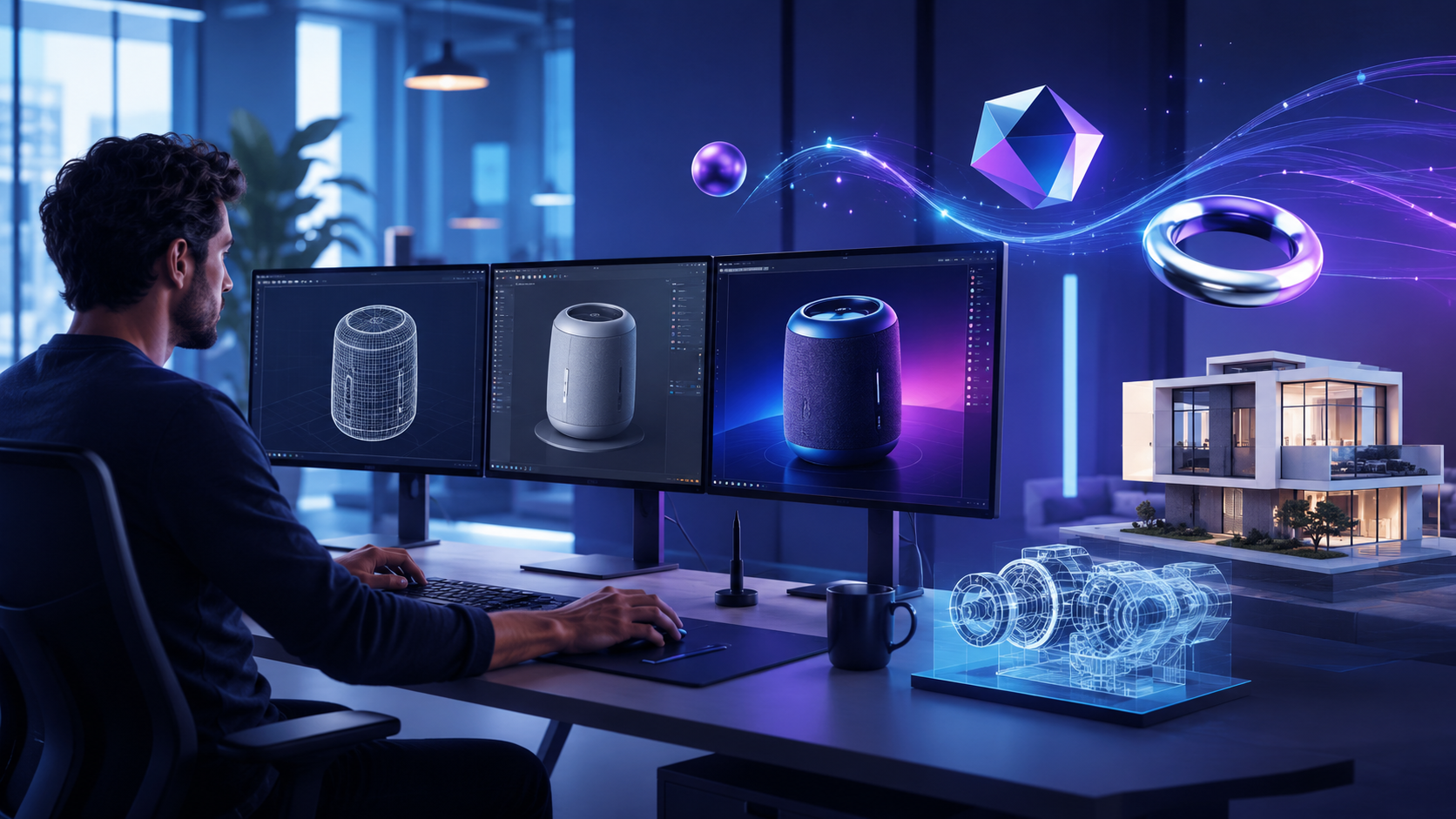

There was a time when 3D animation felt like something reserved for Pixar movies, video games, car commercials, and very large companies with very large budgets. That line has faded. Fast.
In 2026, a furniture company can show a sofa in a room that never existed. A medical device manufacturer can open a product virtually and show every internal component. A startup can demonstrate hardware months before the final production unit arrives. And an online store can turn one detailed 3D asset into product images, video clips, social ads, interactive views, and AR content.
That is why businesses searching for 3d animation services are rarely looking for animation just because it looks cool. Usually, there is a practical problem behind the search. The product is difficult to photograph. The idea does not physically exist yet. The sales team keeps explaining the same thing over and over. Or the marketing department needs far more visual content than another traditional photo shoot can realistically provide.
And yes, 3D still has plenty of wow factor. But the interesting part in 2026 is what happens after the wow.
Why 3D animation makes more sense for businesses now
Digital content has become hungry. A company no longer needs one hero image and a 30-second commercial. It may need a website banner, six vertical clips, product-page images, a trade-show loop, Amazon assets, training material, an explainer video, and something short enough for an Instagram or TikTok ad.
Shooting every version separately can get messy. Locations change. Products need shipping. Samples get scratched. Lighting has to be recreated. A new color suddenly arrives three days after the shoot. You know the story.
A well-built 3D asset changes the equation because the underlying model can often stay while the camera, material, color, lighting, environment, or animation changes.
That does not mean 3D is automatically cheaper. Sometimes a simple real-world photo is still the obvious answer. But when a product needs many visual variations, repeated updates, or views that a camera cannot capture, the economics begin to look very different.
Three changes are especially important right now:
- Real-time rendering has shortened the gap between production and preview, making review cycles much less painful.
- Modern 3D pipelines make it easier to move assets between modeling, texturing, animation, rendering, and interactive environments.
- Brands increasingly need one visual asset to serve several channels instead of creating separate content for every placement.
There is another quiet shift happening too. People are simply more accustomed to seeing 3D. Product configurators, AR previews, animated interfaces, digital showrooms, game-engine graphics, and cinematic product launches no longer feel exotic.
The audience has changed, so the visual language has changed with it.
What are 3D animation services, exactly?
The phrase sounds straightforward, but it covers a lot of ground.
3D animation starts with a digital object or environment built in three dimensions. Instead of recording a physical scene through a camera, artists create or import geometry, assign materials, build lighting, position virtual cameras, and animate whatever needs to move.
That could mean animating a sneaker rotating on a clean background. Or simulating liquid moving through industrial equipment. Or creating a full architectural environment with people, vehicles, vegetation, and changing daylight.
Most commercial 3d animation services involve several stages rather than one person simply clicking an “animate” button. Depending on the project, the workflow may include modeling, CAD cleanup, texturing, rigging, motion design, simulation, lighting, rendering, compositing, sound, and editing.
For the client, though, the technical labels matter less than the outcome. What does the audience need to understand, feel, or do after seeing the animation?
A quick look at common project types
| Project type | What it usually shows | Where it fits | Main advantage |
|---|---|---|---|
| Product animation | Features, materials, movement, assembly | Websites, ads, e-commerce | Shows details traditional video may miss |
| Technical animation | Processes, internal parts, mechanisms | Sales, training, manufacturing | Makes hidden processes visible |
| Architectural animation | Buildings, interiors, planned spaces | Real estate, development, design | Shows a space before construction |
| Character animation | People, mascots, creatures | Entertainment, advertising, education | Adds personality and storytelling |
| Medical animation | Anatomy, procedures, devices | Healthcare, training, presentations | Explains subjects that are hard to film |
| Motion graphics in 3D | Text, logos, shapes, data | Brand films, social media, events | Turns abstract ideas into visual motion |
The categories overlap, of course. A medical animation might also be a product animation. An architectural project can include motion graphics. A tech commercial can mix filmed footage, CG objects, simulated particles, and typography in the same ten seconds.
That mix is normal now.
Product animation has become a particularly useful format
Product companies have an obvious problem: cameras can only film what physically exists.
3D does not have that limitation.
A virtual camera can pass through the body of an electric motor, separate the layers of a mattress, move inside a watch, freeze a stream of water, or make the components of a coffee machine float apart in perfect order.
Try doing that during a normal product shoot without giving the director a headache.
This is especially handy for products with internal technology. A customer may not care about every engineering detail, but seeing the mechanism can make an abstract benefit instantly understandable.
Imagine two explanations for noise-canceling headphones. One is a paragraph describing microphones and sound processing. The other shows sound waves entering the headphones while an animated cutaway reveals what happens inside.
Which one would you rather watch?
The strongest product animation usually does not try to show everything. It focuses on one message at a time. Waterproofing. Airflow. Durability. Assembly. Comfort. Speed. Whatever matters most.
One 3D model can become a small content library
This part often gets missed when companies compare a 3D project with a conventional video.
The final movie is not necessarily the only asset being created.
If the production is planned properly, the same digital product model may become the starting point for additional visual material. A camera angle can be changed. A still image can be rendered at a much larger resolution. Materials can be swapped. A vertical version can be framed for mobile. The model may also be prepared for an interactive experience.
In practical terms, a single project can potentially produce:
- hero website images and product-page renders;
- horizontal, square, and vertical animation edits;
- short clips for paid social campaigns;
- feature callouts and technical close-ups;
- different colors or product finishes;
- trade-show screens and presentation loops;
- interactive product views or AR-ready assets when the project is built for them.
That last detail matters. A cinematic model and a lightweight interactive model are not automatically the same thing. Real-time applications often require different geometry, materials, file sizes, and optimization work.
So if AR, web 3D, or a product configurator may be needed later, mention it before production begins. Retrofitting a heavy model after the fact can feel like packing for Miami and discovering at the airport that the trip is actually to Alaska.
Real-time 3D is changing the production rhythm
Traditional high-end CG rendering can be computationally demanding. A scene may include detailed geometry, reflections, transparent materials, simulated effects, motion blur, and large textures. Producing every frame at final quality takes processing power.
Real-time engines offer another path.
Platforms such as Unreal Engine can render interactive 3D environments as they run, which is why the technology is useful well beyond games. Real-time workflows now appear in visualization, virtual production, broadcast graphics, interactive experiences, and other commercial work.
The practical benefit for a client is not merely technical bragging rights. It is feedback.
Instead of waiting for a polished render before discovering that the camera angle feels wrong, teams can often preview scenes much earlier. Directors can test movement. Designers can explore lighting. Clients can compare compositions before expensive final processing.
It feels more like working with a virtual set than ordering a mysterious black box and hoping something nice comes out later.
AR gives the same asset another job
Augmented reality is another reason companies are paying more attention to reusable 3D assets.
Apple devices, for example, support viewing USDZ-based 3D objects through Quick Look. That makes it possible for compatible experiences to place digital objects into a user’s real surroundings directly from supported apps and web experiences.
For retail, the appeal is pretty obvious. A shopper can get a better sense of scale than a flat photo provides.
A chair can appear inside a living room. A lamp can sit virtually on a desk. A product can be viewed from angles that were never photographed.
AR is not necessary for every company, and forcing it onto an ordinary project just because it sounds futuristic is usually a waste of time. But when size, placement, configuration, or physical context affects the purchase decision, it becomes much more interesting.
The technical pipeline matters more than clients usually expect
Here is something less glamorous but more important: good 3D production is partly about keeping digital files under control.
A scene might involve models from CAD software, textures from one application, animation from another, lighting and rendering elsewhere, and final compositing in a separate package.
Standards such as OpenUSD help 3D tools exchange and organize scene information across production pipelines. That kind of interoperability matters because modern CG projects can become surprisingly big surprisingly fast.
Picture a kitchen visualization. Sounds simple, right?
Now add cabinets, appliances, dishes, glass, metal, wood, fabric, sunlight, artificial lights, reflections, animated camera movement, product labels, and several requested color versions. Suddenly your “simple kitchen” is a small digital ecosystem.
This is why organized production beats flashy software demos every time.
How 3D animation services are typically produced
Every studio works a little differently, but commercial projects usually follow a recognizable path.
Brief and visual direction
Before modeling begins, the team needs to understand the message. Who is watching? Where will the animation appear? Is it supposed to explain, sell, teach, impress, or all four?
Reference images help a lot here. So do brand guidelines, existing campaigns, product photographs, CAD files, packaging artwork, and examples of movement the client likes.
Modeling or CAD preparation
If an accurate CAD model exists, artists may prepare that data for visualization rather than rebuilding the product manually. But engineering geometry is not always ready for beautiful rendering straight out of the box.
For other projects, the model is created from photographs, drawings, dimensions, scans, or design files.
Materials and textures
This is where gray geometry starts looking like something you might actually touch.
Metal needs the right reflection behavior. Fabric needs texture and softness. Frosted plastic should not look like polished marble. Tiny differences matter more than people expect.
Storyboard and animation
For anything beyond a simple turntable, planning motion before polishing frames saves pain later.
A storyboard or animatic establishes camera movement, pacing, transitions, and approximate timing. It is far easier to change a rough preview than redo a finished sequence.
Lighting and rendering
Lighting controls both realism and mood. The exact approach depends on whether the goal is crisp commercial imagery, soft lifestyle visuals, technical clarity, cinematic drama, or something else entirely.
Compositing and editing
Rendered scenes may then be combined with text, interface graphics, filmed footage, sound effects, music, or voice-over.
By this stage, ideally, there should be very few surprises. The expensive question — “Wait, can we change the entire concept?” — belongs much earlier.
What determines the cost of 3D animation?
People often want a simple price per second. Unfortunately, seconds are a pretty bad measuring stick.
Ten seconds of a simple object rotating on a studio background may require far less work than three seconds of liquid simulation, a detailed city environment, or a realistic human character.
Cost tends to depend on what must be created before those seconds can exist.
| Cost factor | Lower production load | Higher production load |
|---|---|---|
| Model | Clean model already supplied | Detailed asset created from references |
| Materials | Simple matte surfaces | Glass, liquids, fabrics, complex finishes |
| Animation | Basic product movement | Characters, mechanisms, simulations |
| Environment | Simple studio setup | Detailed interior or outdoor scene |
| Rendering | Simple lighting and short shots | High-detail cinematic sequences |
| Deliverables | One master video | Multiple formats, versions, and stills |
| Revisions | Clear feedback at planned stages | Major changes late in production |
The last row deserves attention. Late revisions can become expensive because 3D work is layered. Changing the design of an object might affect textures, animation, lighting, simulations, and already rendered scenes.
Early approval is not bureaucracy for bureaucracy’s sake. It protects the budget.
How to prepare before contacting a 3D studio
You do not need to understand rendering engines or polygon counts before speaking with an artist. A good production team should translate the technical stuff into normal language.
Still, arriving with the right information makes estimates far more meaningful.
Before requesting 3d animation services, gather what you already have:
- product photos, CAD files, sketches, or dimensions;
- brand guidelines and existing visual references;
- the main message the animation needs to communicate;
- approximate duration and required aspect ratios;
- where the final content will appear;
- your desired deadline;
- examples of visual styles you like and dislike;
- information about future versions, colors, markets, or product variations.
And mention the budget range if one exists. Seriously. Hiding it rarely produces some magical bargain. It usually means both sides spend time designing a solution that may be completely unrealistic for the project.
A clear budget lets the studio decide where detail matters most.
Photorealistic is not always better
This sounds strange in an article about 3D, but realism can become a trap.
Some projects absolutely need it. Automotive work, furniture, cosmetics, luxury goods, and architectural visualization often depend on convincing materials and lighting.
Other projects communicate better with cleaner, more graphic visuals.
A technical mechanism may be easier to understand when unnecessary surfaces disappear. A medical concept may require simplified anatomy. A software company might benefit from abstract 3D shapes instead of a fake-looking office full of digital humans.
The real question is not, “How realistic can we make this?”
It is, “What visual treatment makes this idea easiest to understand?”
That small change in thinking prevents a lot of expensive nonsense.
Where AI fits into 3D production
No discussion of visual production in 2026 can completely ignore AI. But the reality is less dramatic than either side of the debate sometimes makes it sound.
AI-assisted tools can speed parts of creative work, particularly early exploration, reference generation, concept development, repetitive cleanup, and certain production tasks. They can help teams test ideas faster.
But a commercial 3D project still needs control.
A product cannot randomly change proportions between shots. A medical device cannot invent a component. A brand logo cannot melt into almost-the-right-logo. And an engineering animation needs to show what the mechanism actually does, not what a model thinks looks plausible.
So the valuable shift is not “AI replaces 3D artists.” It is more practical: artists get another set of tools, while clients still need accurate assets, art direction, consistency, and review.
What separates good 3D animation from expensive eye candy?
Good commercial animation has a job.
You should be able to pause almost any important shot and explain why it is there. Perhaps it reveals a feature. Establishes scale. Shows a material. Introduces the brand. Demonstrates movement. Creates an emotional beat.
If twenty seconds look gorgeous but communicate nothing, the render may win compliments while the marketing team quietly wonders what it paid for.
Clarity beats visual noise.
That is especially true on mobile, where details are small and attention is fragmented. Big readable forms, deliberate movement, and a clear focal point usually survive a six-inch screen better than a frame packed with fifty clever details.
3D content should be planned beyond one campaign
This may be the most useful mindset for companies investing in 3D now.
Do not think only about the video due next month. Think about the asset behind it.
Will the same product appear next season in a different color? Will sales need close-up renders? Could an interactive model be useful later? Is another market getting different packaging? Might the animation need vertical versions?
Answers to those questions affect how a production team builds and organizes the project.
Reusable assets require a little more discipline early on, but they can prevent the same work from being rebuilt again and again.
And frankly, nobody enjoys paying twice for the same digital toaster.
FAQ About 3D Animation Services
What are 3D animation services?
They are professional services that create moving visuals from three-dimensional digital models. Work may include modeling, materials, animation, lighting, rendering, simulations, editing, and related visual production.
What businesses can benefit from 3D animation?
Common users include consumer brands, manufacturers, technology companies, architecture firms, real estate developers, healthcare businesses, agencies, educators, and entertainment companies. The format is especially useful when something is difficult, expensive, unsafe, or impossible to film.
Can 3D animation replace product photography?
Sometimes, but not always. 3D is particularly useful for products that need many colors, configurations, angles, or future revisions. Traditional photography may still make more sense for simple products or lifestyle scenes where genuine human interaction is the priority.
How long does a 3D animation project take?
There is no useful universal number. A basic product animation and a character-heavy cinematic sequence are completely different jobs. Timing depends on modeling needs, animation complexity, rendering, feedback rounds, duration, and the number of deliverables.
Do I need a 3D model before hiring a studio?
No. A studio can often create one from CAD data, drawings, dimensions, photographs, scans, or other references. Existing clean 3D or CAD files can reduce part of the preparation work.
Can the same 3D model be used for AR?
Potentially, yes, but the asset may require optimization or conversion. A detailed model intended for cinematic rendering can be too heavy for real-time or mobile experiences, so AR requirements should ideally be discussed early.
Are 3D animation services worth the cost for small businesses?
They can be when the visual asset solves a real business problem or will be reused across several channels. For a company that needs only one simple image, 3D may be unnecessary. For a company producing repeated product visuals, demos, variations, and ads, the calculation can look very different.
Final Thoughts
3D animation has moved into a useful middle ground. It is still capable of cinematic spectacle, but that is no longer the whole story.
For American businesses in 2026, its bigger value may be flexibility.
A product does not need to be physically present. A camera does not have to obey physics. A mechanism can open itself. A future building can already have sunlight coming through its windows. One well-planned asset can feed a website, sales deck, social campaign, trade-show screen, product page, and interactive experience.
That does not mean every project needs 3D. Sometimes a camera, a good photographer, and a clean room are still exactly right.
But when a company needs to explain something invisible, show something that does not exist yet, create many visual variations, or keep producing content from the same product, 3d animation services become much more than a cosmetic upgrade.
They become part of the content infrastructure.
And that is probably the biggest change happening right now. The conversation is moving away from “Can we make a cool 3D video?” toward a much more useful question: “How many things can this 3D asset help us create?”
Leave a Reply