
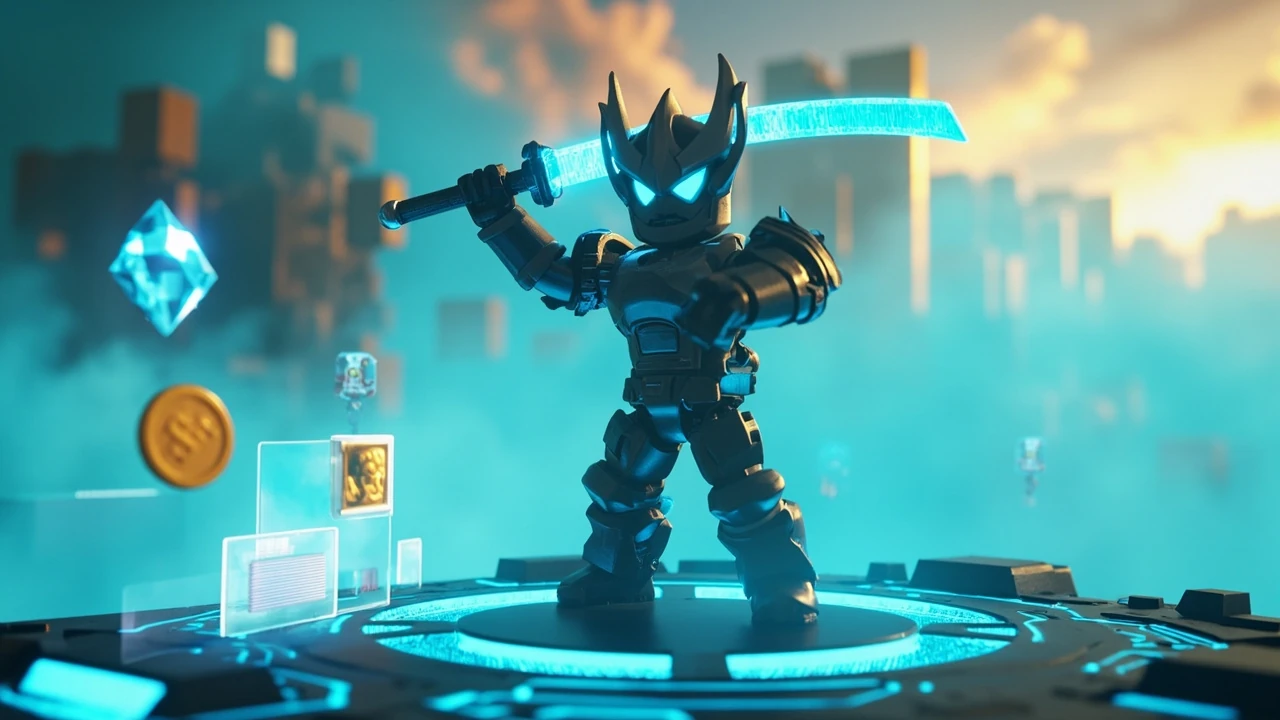

Codes anime rangers x: how reward codes work and how to redeem them
Reward codes inside Roblox anime-inspired tower defense and collection games are short text strings the developer distributes through official channels to grant small in-game items such as coins, gems, summon tickets, or temporary stat boosts. When players search for codes anime rangers x they usually want a current working list, a clear redemption path, and a way to tell the difference between an official reward and an expired or unsafe link. This article explains how these codes generally function inside Roblox, where they tend to appear, how to apply them, and what to do when a code fails, so the redemption process stays short, predictable, and safe for a younger audience that often shares accounts on shared hardware.
Most anime ranger games on Roblox, including community-built experiences that borrow mechanics from titles like Anime Rangers X, follow the same architectural pattern: a developer-maintained code list stored in a remote data store, a server-validated redemption endpoint, and a small UI window inside the game where the player pastes a string. Understanding that pattern helps a player read any future update notes, and it also explains why some codes stop working overnight even when the game still loads normally. The walkthrough below applies to a typical anime ranger experience, and it points out the small places where one developer’s choices may differ from another’s, so the advice does not break when a new patch lands.
How reward codes usually work in Roblox anime ranger games
From a player’s perspective, the redemption loop has four steps: open the code window, paste or type the code, confirm the submission, and read a short message that names the granted reward. The interesting design work happens behind that simple loop. The developer has to decide which reward to attach to each code, how long a code stays active, whether redemption is account-bound or device-bound, and whether submissions are throttled to once per day or once per patch. Each of those decisions changes how players plan around new drops, and each is worth knowing because the official release notes rarely explain the underlying rule in plain language.
Under the hood, a code is just a key in a table. When a player submits a string, the server looks up that key, checks the expiry timestamp, checks whether the calling account has already redeemed it, and either grants the reward or returns one of a small set of error messages. Because the check happens server-side, a code cannot be “unlocked” by editing local files, and a code that was once valid can be removed from the table without warning, which is why a code that worked yesterday may return an error today. This pattern is shared by most Roblox experiences that use codes, and it is one of the reasons a list copied from a fan site can quietly go out of date within hours.
Where redeemable codes typically appear
Developers usually distribute active codes through a small set of predictable places, and learning the pattern is the most reliable way to avoid missing a new drop. The list below covers the channels that are most often used for anime ranger games on Roblox, along with the kind of content a player can expect in each one, and the small signals that suggest a channel is worth watching on a long-term basis.
- Official game description on the Roblox page. The developer often edits the game description to include the latest codes, sometimes with a short note about an upcoming patch or a known issue. The description is the first place to check because the team can update it without waiting for a social post to be approved.
- Verified social accounts. Discord servers linked from the game page, plus a developer’s X or YouTube community post, are common drop locations. Codes are usually posted inside a dedicated channel and then pinned for a few days, with the pin removed once the campaign ends so the channel stays readable.
- Update log or patch notes panel. Some games include codes at the end of a patch entry, rewarding players who read the full changelog rather than just the headline. The code is often a small bonus for following the patch, not a primary reward.
- Limited-time event pages. Anniversary events, collab launches, and milestone celebrations often include a one-off code that expires within a short window, sometimes as narrow as 24 hours if the event is tied to a livestream.
- Creator livestreams and shorts. Codes dropped during a stream are typically valid for 24 to 72 hours, and are mentioned in the stream title or description rather than only on screen, so players who join late can still find the string afterwards.
- In-game mail on first login after an update. Some studios push a code straight to the in-game mailbox of every active player, which is the easiest channel to miss because there is no public post to copy from.
Unofficial lists exist in large numbers, and they should be treated as a convenience rather than a source of truth. Aggregator sites copy and paste from each other, which means a single typo can spread across dozens of pages within hours, and a code that has already expired can keep circulating long after the developer removed it. The safest habit is to compare at least two sources, then confirm the code by pasting it into the in-game window before believing the list is current. A code that returns Already redeemed is a useful signal even when the player has no memory of using it, because it confirms the string at least matches something the developer once issued.
Redeeming a code step by step
Although each anime ranger game places the redemption window in a slightly different menu, the underlying steps are nearly identical. The walkthrough below is written for a typical Roblox anime ranger experience and notes the small variations a player may encounter, including the cases where the button is hidden behind a submenu or where the game locks redemption during a live event.
- Launch the game and reach the main lobby. Many redemption windows are disabled during loading screens, cinematics, or active waves. Reaching a stable main hub area removes that ambiguity and ensures the submission reaches the server in a clean state, which reduces the chance of a false “Try again later” error.
- Open the menu and find the code, redeem, or codes button. It is often marked with a gift icon, a small bird symbol, or a ticket shape. If the game uses a settings cog instead, the codes entry is usually grouped under a submenu called something like Extras, Rewards, or Social, and on mobile the same entry sometimes lives behind a hamburger menu in the top corner.
- Type or paste the code exactly as written. Codes are case-sensitive in many Roblox games, and spaces, em dashes, or hidden characters copied from a chat app can invalidate the entry. Pasting from a trusted source reduces the chance of a stray character, and tapping the field once to clear any autocomplete suggestion is worth the extra second on mobile.
- Submit and read the confirmation message. A successful redemption shows a short message such as Reward granted or You received 250 gems, often with a small pop-up animation. If the message names a reward that does not match the list the player is reading, the code has probably been repurposed for a different campaign.
- Check the in-game mailbox or inventory if the reward does not appear immediately. Some games queue the reward through a mailbox system that the player must open manually before the items move to the main inventory, and a few games hold cosmetic rewards until the player closes and reopens the avatar menu so the cache refreshes.
If the code window returns an error such as Invalid code, Code expired, or Already redeemed, the cause is usually one of the three issues covered in the troubleshooting section below. None of those errors indicates a problem with the player’s account or device, and none should be treated as a reason to repeat the submission rapidly. Spamming the redemption endpoint can hit a rate limit that delays later attempts and, in some games, briefly locks the codes menu until the next server tick.
What kinds of rewards players usually receive
Reward code packages are designed to give a small but noticeable boost without skipping the core progression loop. The table below summarises the reward types that appear most often in anime ranger games, with a short note on how each one usually fits into a player’s plan and on the limits of what a code is meant to do. Reward mixes shift between patches, so the table is a snapshot rather than a fixed rule, but the categories themselves are stable across most releases in the genre.
| Reward type | Typical amount | How players usually use it | Notes |
|---|---|---|---|
| Soft currency (coins, gold) | 1,000 to 25,000 per code | Upgrading early units or rerolling a banner once | Often the most common reward type, because it is hard to over-grant |
| Hard currency (gems, crystals) | 50 to 500 per code | Saving toward a major summon or pity counter | Usually reserved for milestone drops, never daily ones |
| Summon or recruit tickets | 1 to 10 per code | Adding a single pull to a banner | Sometimes locked to a specific banner, sometimes universal |
| XP boosts or training potions | 15 minutes to 2 hours | Equipping before a long farming session | Often stack with paid boosts up to a cap |
| Limited cosmetics | One title, trail, or avatar item per code | Collecting for display rather than power | Rare and usually tied to a specific event or collab |
| Temporary unit rentals | One mid-tier unit for 24 to 72 hours | Filling a slot in a squad for a single session | Less common, but useful for newer players |
The exact reward list depends on the developer. A new patch can shift the typical value of a code upward, especially when the patch introduces a new banner or a new progression system that players are expected to grind through. Watching the official notes for the word code or the gift icon is the simplest way to anticipate a change before the next drop lands, and comparing the reward text in the confirmation message with the table above is a quick way to spot when a developer has quietly changed what a code is worth.
Why codes expire, and why expired codes return errors
Codes are designed to expire for three practical reasons. The first is economy balance: a long-lived code that grants a large amount of premium currency reduces the pressure to engage with the gacha loop, which can hurt retention and reduce the value of paid top-ups. The second is event signalling: short-lived codes act as a timestamped marker, telling players that something has just happened in the game, and they create a small habit loop around checking the developer’s channel on patch days. The third is data hygiene: rotating the list keeps the code table small, which keeps the redemption endpoint responsive and reduces the chance of an old campaign accidentally rewarding new players months later.
A reward code in a Roblox anime ranger game is a short alphanumeric string, usually between four and twelve characters, that the developer has added to a server-side list. The list is checked when the player submits a code through the in-game redemption window. If the submitted string is present, marked as active, has not yet been claimed by the player’s account, and has not passed its expiry timestamp, the server grants the reward and writes a record so the same code cannot be redeemed twice on the same account. This pattern is common across many Roblox experiences and is one of the reasons the platform has become a popular host for anime-style progression games built on top of the wider Roblox engine and economy.
When a code returns Invalid, the most common underlying cause is that the developer removed it from the active table, often because the campaign ended. A second possibility is a typo introduced by an aggregator, especially when the original post used a font where the digit zero and the capital letter O look identical. A third, less common cause is a regional rollout: some developers phase a code across regions or platforms, so a code that works for a friend on a different network may not yet be active in the player’s region, and a code tied to a console build may not work on PC for the first few hours. None of these causes implies a problem with the player’s setup, and none of them is fixed by reinstalling the game or switching devices.
How to tell whether a list of codes is still valid
Because expired codes are filtered out on the server side, the only reliable check is to submit the code and read the response. Players who want a quick visual check before opening the game can use the criteria below, but these are heuristics rather than guarantees, and they work best when combined with the official channel rather than used as a substitute for it. The list is meant to help a player triage a long aggregator page, not to replace a single visit to the developer’s Discord or X account.
- Look for a clear date stamp. A list that mentions the patch version or the date the list was last updated is more reliable than a list with no timestamp, and a list that names the patch number can be cross-referenced against the in-game update log.
- Cross-check the developer’s social channel. If a code is mentioned in a pinned post or in the most recent announcement, it is more likely to be live than a code that only appears in a list, and a code that is no longer pinned has usually expired.
- Watch the response wording. A modern redemption endpoint usually distinguishes between expired, already redeemed, and invalid. A code that returns already redeemed is genuine, even if the player forgot they had used it on an alt account or on a friend’s profile during a previous visit.
- Treat silent failures as expired. If the game returns no message at all after submission, the code is almost certainly no longer in the active table, or the redemption endpoint is temporarily unavailable after a hot patch.
- Check the reward against the patch notes. A code that grants a reward that no longer exists in the game, such as a unit that was reworked out, has usually been retired and replaced with a different string on the developer’s side.
The most common mistake is to trust a list that has been copied from one site to another. A typo in the first character is enough to make a valid code return Invalid, so the safest habit is to copy directly from the developer’s official channel whenever possible, ideally by using the share or copy button that some Discord clients now provide. A list that has been pasted through several chat apps is one of the most common sources of broken codes, because each step can introduce or remove a character.
Safety habits around code sites and code generators
Reward codes are short and easily guessed, which is exactly the kind of surface that attracts low-quality third-party sites. Some of those sites are simple aggregators that copy and paste from the developer and then load the page with ads. Others are designed to harvest Roblox account credentials, push browser notifications, redirect players to install unrelated software, or sell fake “premium” code lists to younger players who do not yet know the difference. The habits below reduce the risk without slowing the redemption loop down, and they apply whether the player is using a family PC, a school laptop, or a personal phone.
- Never enter a Roblox password on a third-party site. Legitimate codes are entered inside the game itself, not on a website, and any page that asks for a password in exchange for a “free code” is not a code site at all.
- Avoid “code generator” tools. They do not connect to the developer’s redemption endpoint. At best they output random strings, at worst they install unwanted software, change browser settings, or open the door to account theft.
- Prefer the developer’s own links. The game page on Roblox usually lists the official Discord, X account, and YouTube channel. Those are the safest places to find current codes, because the developer controls the channel directly and can remove a code the moment the campaign ends.
- Use a unique password and two-step verification on the Roblox account. Even if a site is compromised, the account itself stays protected, and a parent or guardian can usually set up two-step verification through the account settings without needing to contact support.
- Log out of shared devices. Codes are usually account-bound, so logging out prevents the next user of a shared device from claiming a reward on the wrong profile, and it also keeps the redeem history private.
- Do not run “Roblox code” executables or scripts. Client-side scripts cannot grant rewards on their own, and any executable that claims otherwise is at best a scam and at worst a vector for malware that targets saved passwords and browser sessions.
None of these habits are unique to anime ranger games, but they matter more in this corner of the Roblox ecosystem because the audience skews younger and the code lists are often shared through informal channels, including screenshots in group chats and reposted videos on short-form platforms. A small amount of caution makes the experience noticeably safer, and it costs nothing in the long run because the legitimate channels are already where the codes appear first.
What to do when a code does not work
Even when a code is genuine and recent, the redemption window can still reject it. The table below maps the most common error messages to the most likely cause and the safest next step. It is not a definitive technical reference, but it covers the situations players report most often, and it pairs each error with one realistic follow-up action rather than a long list of guesses. The aim is to help a player move on quickly instead of refreshing the menu for several minutes.
| Error message | Most likely cause | Suggested next step |
|---|---|---|
| Invalid code | Typo, copied from a stale list, or the code never existed on the live table | Compare with the developer’s official channel and retry |
| Code expired | The developer removed the code after the campaign ended | Wait for the next code drop and avoid reposting the expired string |
| Already redeemed | The code was used on the same account previously | Check the in-game mailbox, then continue with the next code on the list |
| Try again later | Rate limit on the redemption endpoint after several rapid submissions | Wait a few minutes before submitting another code |
| No response | Network hiccup, or the code window is non-functional after a hot patch | Rejoin the game and retry; if the problem persists, check the developer’s status post |
| Region locked | The code was only rolled out to a specific country or platform | Wait for the wider rollout or use an alternative code from the same drop |
The key point is that none of these errors indicate a problem with the player’s device. They are server-side responses, and the only useful follow-up is to confirm the code from a second source before retrying. Repeated rapid submissions rarely help, and they can hit a rate limit that delays later attempts. If a code keeps failing after a clean copy from the developer’s channel, the most likely explanation is that the developer has not yet pushed the code to the player’s region, and waiting an hour is usually more productive than pasting the string again.
How developers decide which codes to publish
For anyone interested in the production side, the decision to publish a code is a small but real piece of live operations work. A code is a one-line addition to a data table, but it also implies a reward definition, an expiry date, a channel to publish through, and a player-facing message that has to be translated if the studio operates in more than one language. The list below is a useful mental model for how a small Roblox team usually approaches a new code drop, and it explains why some campaigns feel more generous than others even when the underlying game is the same.
- Pick the campaign. The team chooses an event, a milestone, a collab, or a community goal that justifies a thank-you reward. The campaign sets the tone: a small bug-fix patch rarely carries a code, while a major update or a collab launch almost always does.
- Decide the reward mix. The reward is usually a small currency bundle plus one cosmetic or summon ticket, chosen to feel meaningful without breaking the economy. The team checks the in-game economy notes to make sure the code does not overlap with an existing free source of the same reward.
- Set the expiry window. A short event might use a 48-hour code, while a milestone might use a multi-week code that ends when the next patch lands. The window is chosen to match the campaign, not the player’s convenience.
- Publish and pin. The code is posted on Discord, X, and the game description, then pinned long enough for active players to see it. Smaller studios often stagger the publish across channels so each audience gets a small “first” moment.
- Review telemetry. The team checks the redemption rate and the average reward granted per active account, then uses that number to tune the next drop. A code with a low redemption rate usually means the publish was missed, while a very high rate means the reward was either too generous or the audience was unusually active that week.
- Retire the code cleanly. Once the expiry window passes, the code is removed from the active table and any leftover rewards in the data definition are moved to the archive, so old strings do not quietly reappear in future builds.
Players who want to anticipate the next drop can watch for the triggers above. A new banner, a collab trailer, a milestone in the developer’s social following, or a developer livestream announcement is usually followed by a code within a day, especially if the team has a public release cadence. Following the developer’s posting habits is more reliable than following any single aggregator, because aggregators are often slower than the channel they copy from.
Related Roblox patterns worth knowing
Anime ranger games share several design patterns with other Roblox experiences, and recognising those patterns makes it easier to navigate new releases in the same genre without relearning the menu from scratch. The points below are useful background for anyone who plays more than one Roblox tower defense or gacha-style experience, and they are a good starting point for a player who is about to try a new release and wants to know which buttons to look at first. None of these patterns is unique to a single game, and most of them will still be true a year from now even as specific titles come and go.
- Daily reward streaks. Many games mix codes with a daily login streak. Codes tend to grant a single larger boost, while streaks grant a smaller but cumulative bonus that grows with the streak length, so the two reward systems are complementary rather than competing.
- Banner-based summoning. Limited-time banners reset the pity counter, so codes that grant summon tickets are most valuable near the start of a new banner. Holding tickets until a banner is announced is a habit many experienced players adopt, because the pity counter is the only part of the summon system the player can actually plan around.
- Economy patches. A patch that introduces a new unit tier or a new currency usually comes with a wave of codes to keep early progression smooth, which is one of the most reliable times to look for a drop. The team often uses codes as a soft onboarding tool for the new content.
- Community milestones. Some developers tie a code to a community goal, such as a follower count, a like goal, or a Discord member threshold, and release the code only when the goal is met. These campaigns reward the audience as a group rather than as individuals, and the code often expires as soon as the goal is reached.
- Cross-game collaborations. A collab with another Roblox experience or with an external anime brand is a frequent source of codes, and the reward is often a cosmetic that references the partner property. Collab codes are the most common source of limited cosmetics, and they are also the most likely to be region-locked.
These patterns are not unique to a single game. They are part of how the broader Roblox anime genre operates, which is why so many of the same redemption habits transfer cleanly between experiences. For a player who enjoys Roblox titles broadly, learning one redemption flow is usually enough to feel at home in the next anime ranger release, and the small differences are easy to learn once the underlying pattern is clear.
Frequently asked questions
How do I open the code window in a typical anime ranger game?
Most anime ranger games place the code window behind a button on the main lobby HUD, often marked with a gift icon, a small bird symbol, or a ticket shape. The exact button is in the bottom or side bar, and in some games the codes entry is nested under an Extras or Settings submenu. If you cannot find it, the in-game help button usually lists the codes entry along with the rest of the menu structure, and the developer’s Discord often has a screenshot of the menu for newer players.
Why does a code return “Invalid” even when the list says it is new?
An “Invalid” response almost always means the string on the list does not match the string in the developer’s data table. The most common causes are a typo introduced when the list was copied, a missing character that was trimmed by a chat app, or a code that was rolled out only to a specific region. Comparing the code against the developer’s own post before retrying is the fastest way to rule out a typo, and a code that still fails after that is usually waiting on a regional rollout.
Are codes account-bound or device-bound?
In the large majority of Roblox anime ranger games, codes are bound to the Roblox account rather than the device. A code redeemed on one account does not transfer to another, even if both accounts play on the same hardware. This is why logging out of shared devices and confirming the active profile before redemption is a useful habit, especially for younger players sharing a single PC or console, and it is also why a code “lost” to the wrong account cannot be recovered by the developer.
Do codes give a meaningful advantage or are they mostly cosmetic?
Codes usually give a small but noticeable advantage. The most common rewards are soft currency, a handful of hard currency, or a few summon tickets, which together shave a small amount of grind off the early progression loop. Limited cosmetics also appear, especially around collabs, but they are the minority rather than the rule. A code will not skip the core banner chase, and it is not designed to replace a paid top-up, so the value of a code is best understood as a small head start rather than a shortcut.
Can a code be redeemed more than once on the same account?
No. The redemption endpoint writes a record to the account when a code is claimed, and the same code returns an “Already redeemed” error on every subsequent attempt. This is true even if the reward was granted and then spent on something else. The only way to use the same code on a different profile is to redeem it on a different Roblox account, which is why codes shared between friends are usually split by account rather than copied between them.
What should I do if a code works for a friend but not for me?
The most common cause is that your account redeemed the code earlier and the record is still in place, or that the rollout is region-specific and the code has not yet reached your region. A second possibility is that the friend is playing on a different version of the game, for example a beta branch or a console build. Checking the in-game mailbox for the reward, then comparing the redemption error with the table in the troubleshooting section above, usually points to the cause within a minute, and waiting an hour or two resolves most regional cases on its own.
Are third-party code list sites safe to use?
Aggregator sites vary widely in quality. The safest pattern is to use them only as a hint, then confirm the code against the developer’s official channel before pasting it into the game. Avoid any site that asks for a Roblox password, that advertises a “code generator”, or that pushes a download. Those are the most common signs of a low-quality or unsafe destination, and the safest response is to close the tab and return to the official channel rather than trying to find the code through a less reputable source.
How often do new codes appear?
The cadence depends on the developer. A small team might drop a code once per major patch, while a more active studio might drop a code every week or two, especially around events. Following the official Discord and the verified social accounts is the most reliable way to keep up, because the cadence usually appears in the channel topic or in the developer’s posting habits long before it is documented anywhere else, and a player who watches the channel for a few weeks can usually predict the next drop without checking a list.
Leave a Reply